As I stated in the previous blog entry, I had to leave Dallas early Saturday to get back to Chicago for a commission premiere. I was sad to leave Dallas and its warm weather, its amazing Arts District of grand performance spaces and excellent art museums, and a variety of dining offerings, but we composers need to be at premieres! So my good friend Reg Unterseher is guest blogging about Saturday, the last day of the Dallas conference.
Reg is a very cool guy- he has a great baritone voice, wonderful chops as a composer (he is Washington State Music Teachers' Association Composer of the Year for 2013), and is quite visionary about the future of choral music. He is also NW Division Men's R and S chair, and sings with MEN- Male Ensemble Northwest, a truly great group. Reg's website is here. Here is Reg's recap of his Saturday in Dallas:
 |
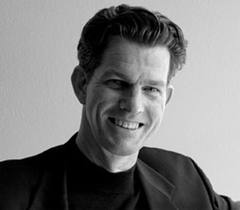
| Reg Unterseher |
Reg is a very cool guy- he has a great baritone voice, wonderful chops as a composer (he is Washington State Music Teachers' Association Composer of the Year for 2013), and is quite visionary about the future of choral music. He is also NW Division Men's R and S chair, and sings with MEN- Male Ensemble Northwest, a truly great group. Reg's website is here. Here is Reg's recap of his Saturday in Dallas:
By the time the last day of any ACDA National Conference rolls around, my ears are full and my body is spent. Saturday in Dallas was no exception. My day started with an 8 AM Men's Chorus Reading session. I am NW Division Men's Choirs R and S chair, so I conducted a couple of pieces. The thing that especially made it worth waking up for was the inclusion of the Turtle Creek Chorale (directed by Trey Jacobs), who served as demonstration choir for three pieces.
 |
| Trey Jacobs |
The use of demonstration choirs is something that I think improves the usefulness and musicality of reading sessions. Turtle Creek Chorale stayed for the R and S roundtable session, where they sang some more and took part in the discussion of why men sing, how to get and keep men singing, and how a community of choral singers can have such a huge impact on a person's life. They brought me to tears several times with their stories and their singing.
By the time that session was over, I was even more wrung out, physically and emotionally. Even though there were marvelous choirs on the next scheduled concert, I decided to pace myself and headed to the food trucks instead of the Opera House.
Ah,
the Dallas food trucks, and yet also a nod to the goodness that was the Dragonfly Bar
at Hotel Zaza (order the Moscow Mule off the drink menu also the Wasabi Wonton Potato
Pouches). These trucks were a wonderful aspect of the conference both
for the varied and good food and the social aspects. I loved the
Ssahm BBQ truck, with their fusion Tex-Korean Daeji and Ddak tacos
and kimchee fries. I did not try the bacon wrapped hot dog, but it
got my attention. My other favorite was the Cajun Tailgaters truck
with the crawfish pistolette, red beans and rice. I did not sample
from every truck, so maybe what would have been my favorite passed me
by. That’s the way it is with so many things at these conferences,
you can't do everything. In any case, with the weather so perfect, I
frequently found myself at the picnic tables, in conversation with
interesting people who I had never met before and felt like instant
friends.
The early Saturday afternoon Gold Track concert in Meyerson featured mixed choirs from Florida State directed by Kevin Fenton, the Fullerton College Chamber Singers directed by John Tebay, and the Kennesaw State Men's Ensemble directed by Leslie Blackwell. I loved the whole thing--varied, excellently prepared, visually interesting without becoming gimmicky; all three choirs exhibiting different ways to be wonderful. My R and S responsibilities will show in my particular enjoyment of the men's ensemble. I had attended Dr. Nicole Lamartine's excellent session on Wednesday morning on women conducting men's ensembles, and Dr. Blackwell's leadership was a great example of how successful this can be. I loved their literature and the creative use of unusual percussion sounds without it turning into a percussion concert.
The early Saturday afternoon Gold Track concert in Meyerson featured mixed choirs from Florida State directed by Kevin Fenton, the Fullerton College Chamber Singers directed by John Tebay, and the Kennesaw State Men's Ensemble directed by Leslie Blackwell. I loved the whole thing--varied, excellently prepared, visually interesting without becoming gimmicky; all three choirs exhibiting different ways to be wonderful. My R and S responsibilities will show in my particular enjoyment of the men's ensemble. I had attended Dr. Nicole Lamartine's excellent session on Wednesday morning on women conducting men's ensembles, and Dr. Blackwell's leadership was a great example of how successful this can be. I loved their literature and the creative use of unusual percussion sounds without it turning into a percussion concert.
 | |||||||
| Nicole Lamartine |
 |
| Leslie Blackwell |
By this time I was starting to feel the onset of a cold, and I had heard so many performances of depth and power that I was considering calling it good and skipping the last concert. In my defense for even considering such a thing, it was my second National Conference of the week, as I had been at the MTNA Conference in Anaheim for four days before coming to Dallas. I had a student in the Senior Voice Finals there, and I am very proud to say she took third place. The opportunity to hear the Tallis Scholars live, though, was too great an opportunity to pass up. I considered hopping tracks to hear them in the glorious acoustic of Myerson Symphony Hall, but had to weigh that against how I felt physically. I bit the bullet and headed to my hotel room to lie down for an hour before hearing them in the Winstead Opera House at the evening performance.
Feeling much better for having taken the break, I arrived early and found myself in the company of Bruce Browne, Kevin Memley, and Ethan Sperry. I am constantly amazed at the brilliant, open, friendly folks I am allowed to rub shoulders with at ACDA, such a treat. We were in the center close to the front, which we all felt was the best place to hear well in Winstead. In Meyerson, I loved sitting on the side in the box seats, where I could both see well and almost watch the sound swirl around the hall and perfectly tail off towards heaven through that dome above the balcony. Getting to hear the organ in those AGO sponsored pre-concert mini-concerts was fantastic, BTW.
The first chorus, the University of Delaware Chorale directed by Paul Head, had well-balanced literature, from Byrd to Bruckner to modern composers, including some that I did not know but will now look out for. They gave an energetic, excellent performance.
The second chorus was the San Antonio Chamber Choir directed by Scott MacPherson. I was immediately struck with the richness of the sound, especially the basses, in a room that seemed to me to favor the upper voices. They had a mature sound, a rich and dense program, different than any of the other programs I heard. I always love the infinite variety of excellence that can exist, and how different choirs can sound so different from each other and still be spectacular.
 |
| Scott MacPherson |
Then, the Tallis Scholars came out on stage and began singing what was for me the standout performance of the entire conference. A quick aside—I tried something for all the concerts that I had never done before, which was to not take or read any programs, just listen to the music and watch the performance to see if this reduced the influence of my prejudices. I would not do this every conference, but I am glad I tried it. They began with Palestrina, as so many things should. It was fascinating to hear them take a few bars to really find each other's voices in the hall, having just come from singing the same program in the very different acoustic environment of Meyerson. It was, of course, well sung right from the start, but then it became almost miraculous. Next, they sang the piece commissioned for their 40th anniversary season, Whitacre's "Sainte-Chapelle." I am glad to say that it was truly crafted for the approach, sound, and programming of the Tallis Scholars, starting with a chant melody that moved into contrapuntal textures and allusions. It was not just another series of cluster chords, something I had heard more than enough of by the end of the conference, though by the middle it was identifiably a Whitacre piece and did have plenty of his signature harmonic structure and movement.
 |
| The Tallis Scholars |
Then,
the Pärt Nunc Dimittis-from the first bar, my eyebrows went up at
the thought of doing this piece with just ten singers. It was a revelation,
in so many ways. When the C# Major “Lumen” progression rang that
room, I could not breathe for a few seconds. I could feel the sound
in my whole body. Now, I had happily felt the power of opening up the
floodgates of a large chorus many times during the conference, but
this was different. True, they were singing with full resonance, but
it was not the volume that gave it such power. It was the alignment,
balance, and connectedness of the sound. I will remember that sound,
I can still hear it in my head. In the whole conference, those 15
seconds were the absolute peak for me. When Pärt writes a major
chord, it sounds more major than when anyone else does. I feel like
now I know what a major chord really sounds like.
From the Pärt Nunc they took us straight into the Palestrina Nunc, perfect Palestrina bookends. When they were done, the audience of course would not sit down or stop clapping until they came out for an encore. The Tallis “Loquebantur variis linguis” was another perfect choice. With its unapologetic dissonances, it sounds timeless.
These three choirs of the last concert represented so well for me three very important faces of choral music--the energy of a large ensemble of young singers, the depth of a medium sized group of mature singers, and the pinnacle of what a world-class, targeted, visionary small ensemble can achieve.
From the Pärt Nunc they took us straight into the Palestrina Nunc, perfect Palestrina bookends. When they were done, the audience of course would not sit down or stop clapping until they came out for an encore. The Tallis “Loquebantur variis linguis” was another perfect choice. With its unapologetic dissonances, it sounds timeless.
These three choirs of the last concert represented so well for me three very important faces of choral music--the energy of a large ensemble of young singers, the depth of a medium sized group of mature singers, and the pinnacle of what a world-class, targeted, visionary small ensemble can achieve.
COMING UP NEXT: Uncle Paul's short recap of the whole conference, with shout-outs to some of the people who made this whole thing happen.
Hey readers, please consider posting a comment and/or subscribing to this blog. It's almost painless! I am also looking for m0ore guest bloggers- you can write about anything you think is interesting.


 Posts
Posts


